
Suitable for
- Seborrhoeic eczema on head, face, back
- Scaly, reddened skin areas
- Scaling on the scalp
- Dry skin that does not improve with moisturiser
Flaking skin treatment Vienna · Specialist diagnostics
4.8 · 4,327 Google-Bewertungen · Austria’s most-reviewed institute
Flaking skin · Seborrhoeic eczema
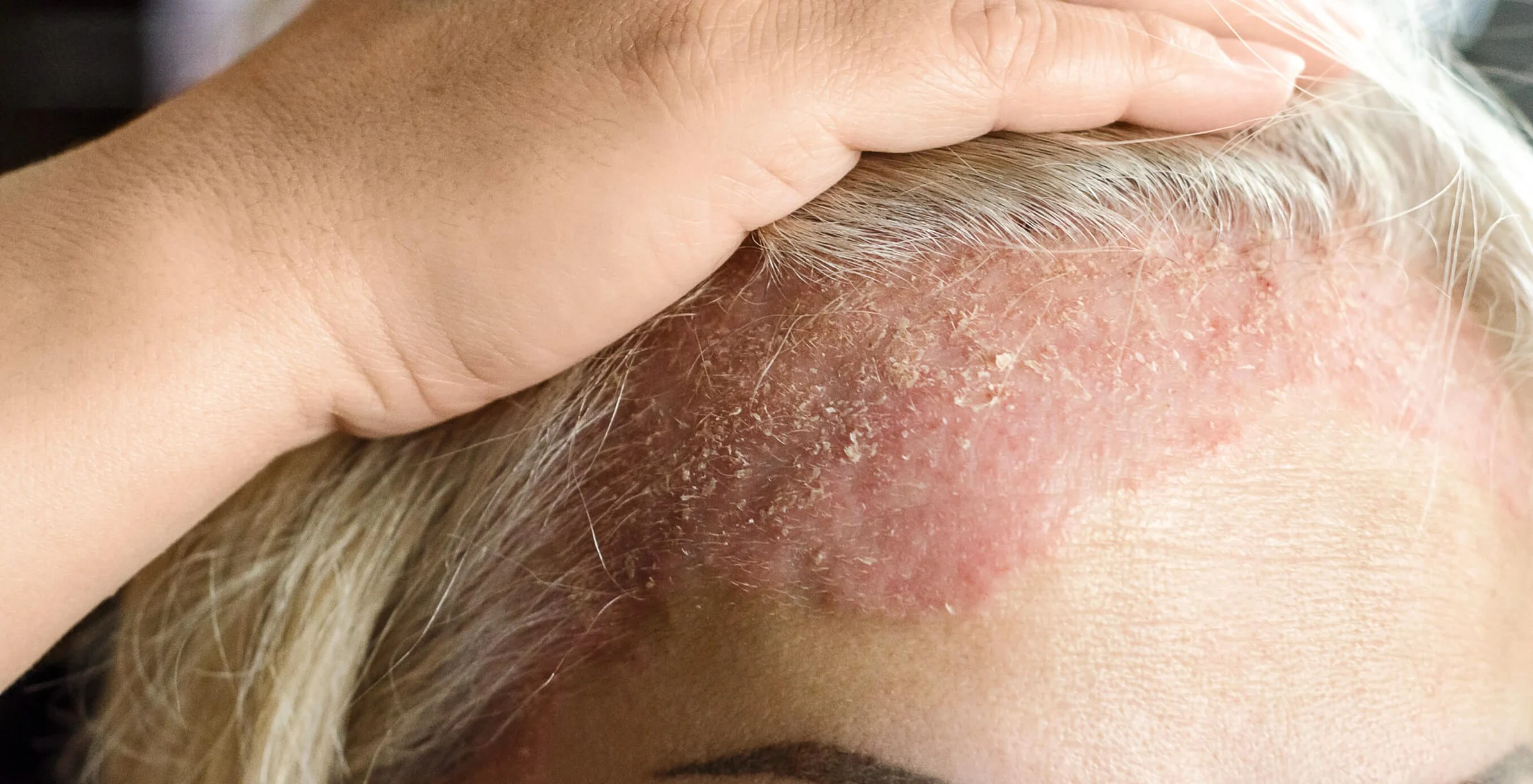
Scaly skin is a symptom of a number of skin diseases, such as psoriasis, atopic dermatitis, fungal infections of the skin, or even seborrhoeic eczema, a chronic inflammatory skin rash that occurs mainly in skin regions rich in sebaceous glands – especially on the head – and is characterised by scaling.
Answer a few short questions, with a photo if you like. Our specialists get back to you within 24 hours with a first assessment. Free of charge and without obligation.
Causes and symptoms of seborrhoeic dermatitis, diagnosis, treatment and the right time to see a doctor.
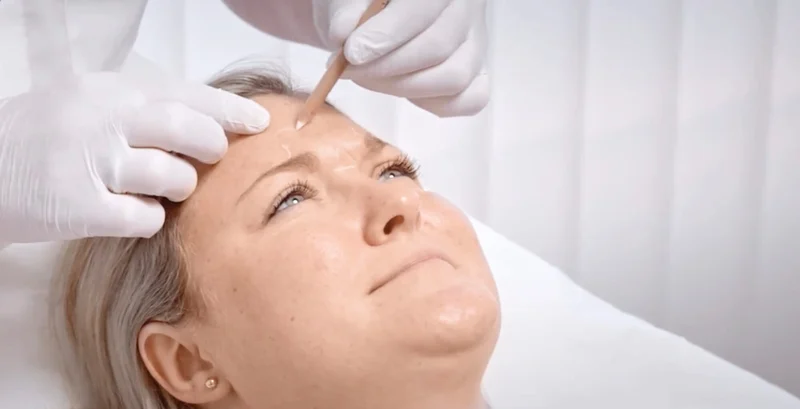
The experienced dermatologist can often detect skin diseases with the naked eye due to their typical characteristics. In addition to talking to the patient about the course of the disease, an examination with a dermatoscope (digital magnifying glass) is carried out for a precise diagnosis. Based on the diagnosis and current guidelines, the specialists at Dermacare develop an individual treatment concept and inform you about possible treatment options.
Dry and scaly skin occurs when the natural fat and moisture regulation of the skin is disturbed. There can be many reasons for this. You should see a doctor if you have been suffering from dry skin for a long time and applying cream does not relieve the symptoms, the skin suddenly becomes dry for no apparent reason, or the dry skin areas begin to flake, hurt, redden or become inflamed.
The cause of the scaling and eczema in seborrhoeic dermatitis has not been fully established. Possible factors include excessive sebum production and overgrowth of yeasts on the skin; a hereditary predisposition is also possible.
Skin diseases can be well characterized according to the region in which they occur preferentially. Seborrheic dermatitis, for example, occurs in the area of the sebaceous glands, which are mainly found in the central chest and back, on the face and on the scalp. As the skin disease occurs mainly on the head in infancy, it is also known as “cradle cap”. In babies, eczema usually heals without medical treatment.
Seborrheic eczema is described as a clearly defined redness of the skin with yellowish scales on top of it that feel greasy. The appearance can vary depending on the severity of the condition – from single flakes to spreading to several areas of skin with inflammatory eczema.
During the initial consultation at Dermacare, which takes about 30-35 minutes, the experienced dermatologist develops an experience-based therapy concept based on the diagnosis.
Dermacare uses the latest procedures and technologies both for diagnosis, examination of the skin using a dermoscope (digital magnifying glass) and for treatment.
At a follow-up appointment, which takes place one to three months later depending on the course of treatment, a possible follow-up consultation will be scheduled in the course of the progress monitoring/ discussion of findings depending on the course of treatment.
Medical services for the treatment of diseases of the hair and nails can be submitted to the health insurance company for reimbursement.
Professional treatment
For a first-class aesthetic result, the doctor’s experience in diagnosis and treatment is crucial. The specialists at Dermacare have relevant additional qualifications and extensive experience, which is why we can look back on satisfied clients and excellent treatment results.
Detailed consultation
We attach great importance to a detailed consultation and therefore take the time for a detailed initial consultation, during which you will receive all information regarding diagnosis, treatment, treatment options and the course of treatment and during which all your questions will be answered.
Latest technology
In order to optimise diagnosis and treatment, our medical specialists undergo continuous further training and are familiar with the latest treatment methods. As Dermacare is equipped with the latest devices on the market, we offer patients treatment based on the latest scientific and technical knowledge.
An experienced dermatologist often recognises skin conditions with the naked eye alone. For a precise diagnosis, an additional examination is carried out with the dermatoscope, a digital magnifier.
Even before the consultation with our specialist, we ask you to complete a medical history questionnaire, which forms the basis for the subsequent discussion.
At Dermacare the consultation, examination, diagnosis and treatment of skin diseases is carried out by experienced specialists in dermatology.
The success of the therapy is assessed at the follow-up appointment (progress check / discussion of findings) and a decision is made on the further procedure.
The treatment is carried out by our medically trained team under medical supervision — with the relevant additional training and many years of experience.
Your treatment team
The treatment price depends on the treatment effort and the size of the area to be treated. In the consultation, the doctor will determine the treatment costs according to the circumstances.
(*) In the initial consultation, an experienced specialist doctor takes up to 30 minutes to advise you comprehensively. This special consultation carries a fee of €150. If you subsequently decide on a treatment, €50 will be credited to you.
Under certain conditions, the costs of the consultation/treatment are partly reimbursed by the Gesundheitskassa (Austrian health insurance fund) or, depending on your policy, by your private health insurer, if you submit the invoice.
Start your free initial assessment and describe your concern, or book your appointment directly with our dermatologists.
Seborrhoeic eczema is a chronic inflammatory skin rash that occurs mainly in areas rich in sebaceous glands, especially on the head. Typical signs are sharply defined redness with yellowish, greasy-looking scales. The cause has not been conclusively established; excessive sebum production, colonisation with yeast fungi and a hereditary predisposition are under discussion.
No, seborrhoeic eczema is not considered contagious. It is an inflammatory skin condition that is not passed from person to person, even though it causes visible scales and redness. Since scaly skin can have many causes, including a fungal infection, a medical assessment is advisable.
After the diagnosis, the specialist develops an individual treatment plan based on current guidelines. Milder forms are treated topically, more severe forms where necessary with medication in the form of tablets or injections. The diagnosis is made through a consultation and with the dermatoscope, a digital magnifying glass.
In adults the condition often runs in flare-ups and can recur, whereas in babies it usually clears up without medical treatment. Targeted therapy can allow symptom-free phases. To assess the course, a follow-up appointment takes place at Dermacare one to three months later, depending on the findings.
A visit to the doctor makes sense if moisturising does not relieve the dry skin, if the skin suddenly becomes dry for no apparent reason, or if the patches scale, hurt, are red or become inflamed. If you have pain or inflammation, you should seek medical advice soon. The doctor will clarify which skin condition is behind it.
Prices start at €150, and the treatment price depends on the complexity and size of the area. The initial consultation of up to 30 minutes is charged at €150, and if you go on to treatment, €50 is credited. The medical service can be submitted to the health insurance fund; under certain conditions it is partly reimbursed.
We will get back to you by phone or email within 24 hours. No obligation — you decide afterwards.
4.8 · 4,327 Google Bewertungen
Austria’s most-reviewed institute